.png?width=100&height=100&name=my-notion-face-portrait%20(2).png "My notion face (Sondos Yasser)")
Most blog advice is outdated.
A lot of articles are still written only for Google rankings while completely ignoring how people now discover information through AI tools like OpenAI ChatGPT, Google AI Overviews, Anthropic Claude, and Perplexity.
Search behavior has changed.
People are no longer searching only with short keywords like:
“best email platform”
Now they ask:
“What’s the best email platform for creators selling digital products with automations?”
This changes how blogs should be written, structured, and optimized.
If your content is vague, repetitive, hard to scan, or written only to satisfy old SEO tactics, it will struggle to rank both in search engines and AI generated results.
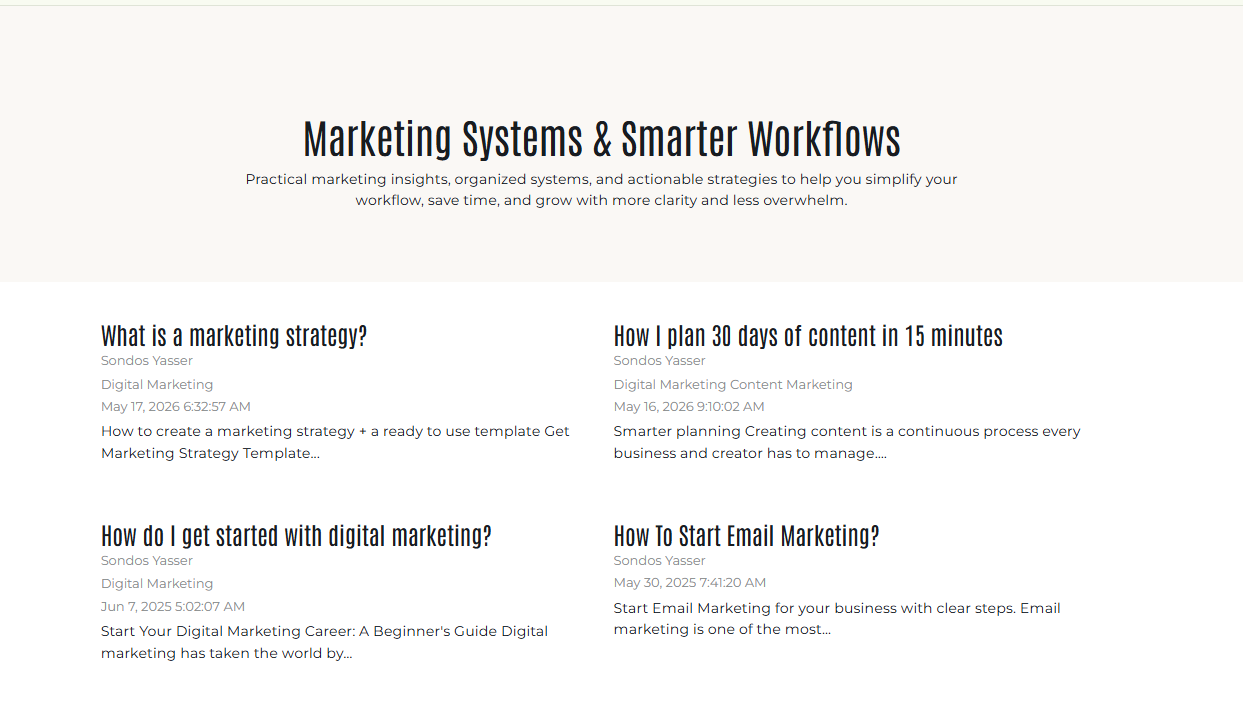
This guide breaks down exactly how blog rankings work in 2026 and how to create articles that perform well in both traditional search and AI search systems.
What Changed in 2026 Blog Rankings?
Search engines now prioritize:
• Clear answers
• Context rich writing
• Experience based insights
• Structured information
• Semantic relevance
• Readability and scanability
• Topical authority
• Helpful formatting for AI extraction
AI tools also summarize and quote content differently than traditional search engines.
Instead of only ranking webpages, AI systems now extract:
• Definitions
• Lists
• Comparisons
• Steps
• Statistics
• Examples
• Recommendations
• FAQs
• Frameworks
This means your article needs to be:
- Easy for humans to read
- Easy for AI systems to understand
You are no longer only writing for ranking.
You are writing for retrieval.
SEO vs AEO vs GEO
A lot of creators confuse these terms, so here’s the simplest way to understand them.
The Biggest Mistake Bloggers Make in 2026
Writing generic content.
AI generated generic blogs are flooding search results.
Articles that say things like:
“Content is important for businesses”
or
“Social media helps brands grow”
provide less value.
Search engines and AI systems are getting better at detecting shallow content.
Specificity wins now.
Instead of:
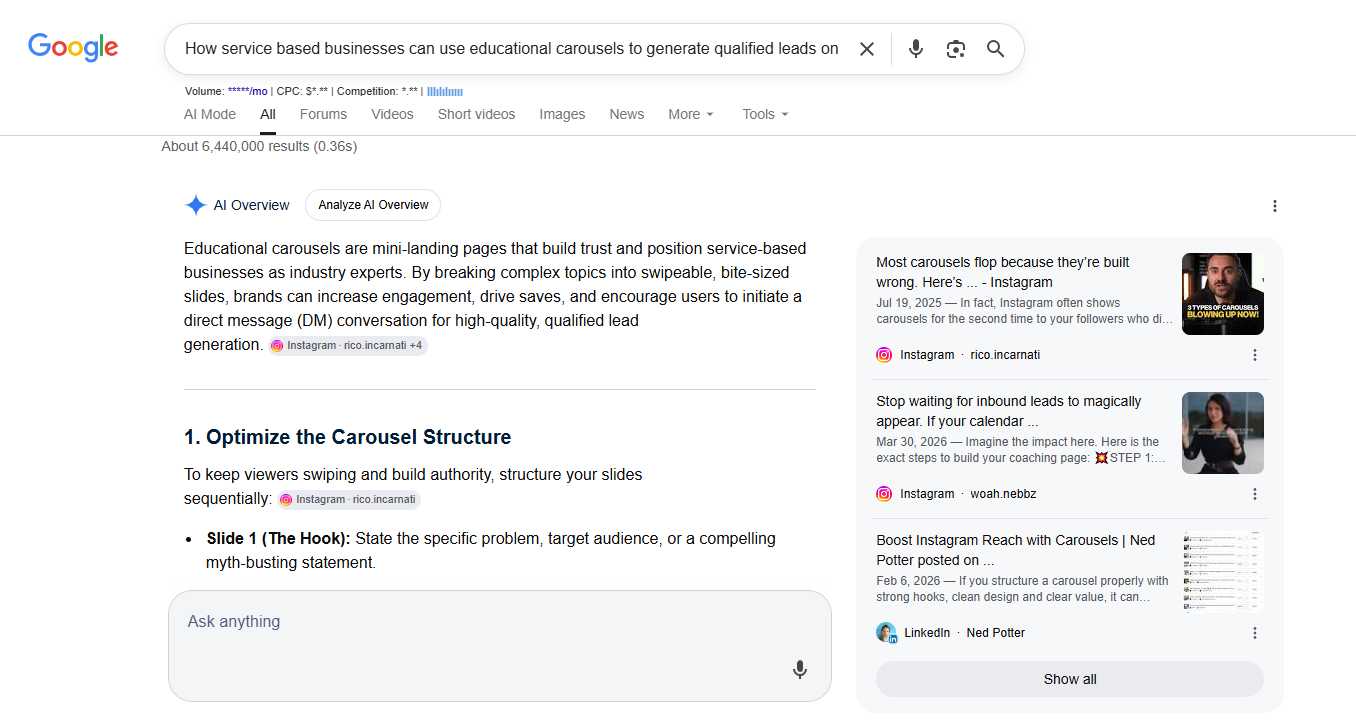
“How to grow on Instagram”
Write:
“How service based businesses can use educational carousels to generate qualified leads on Instagram”
Specificity improves:
• Rankings
• Search intent match
• Click through rate
• AI retrieval accuracy
• Reader trust
How to Structure Blogs for AI and Search Rankings
1. Start With Search Intent
Before writing anything, identify:
• What the reader actually wants
• What stage they are in
• What problem they are trying to solve
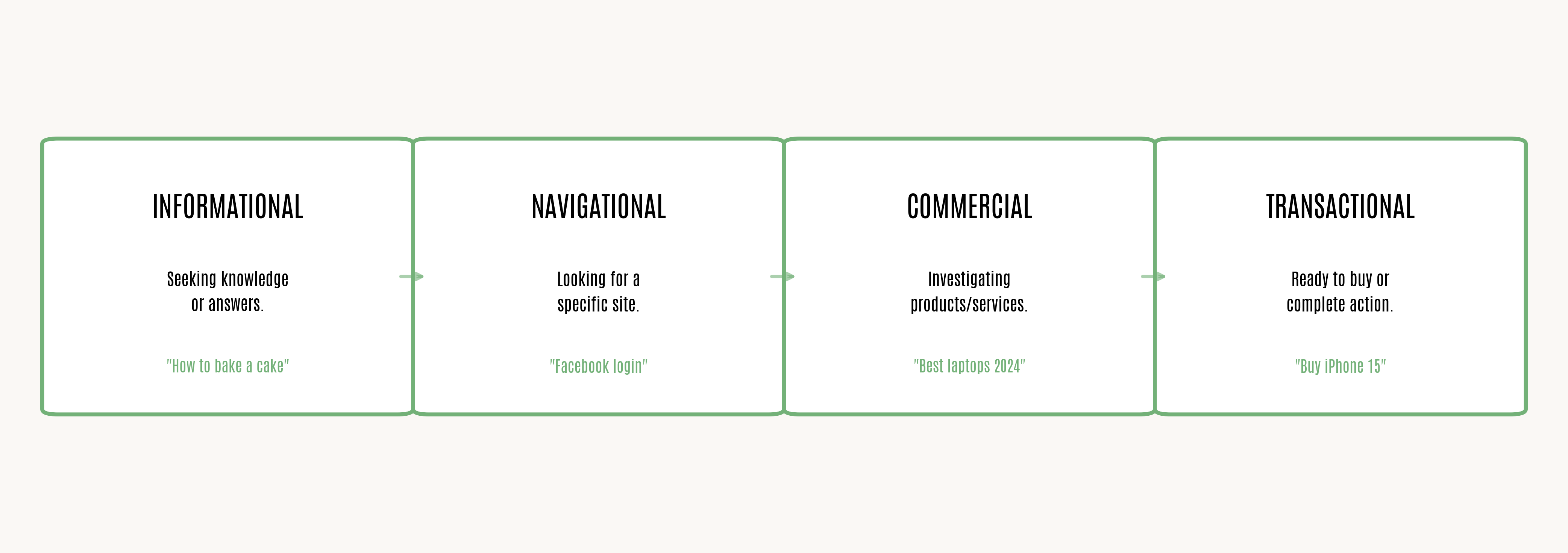
There are four major search intents:
Informational
“How does SEO work?”
Navigational
“ConvertKit pricing”
Commercial
“Best email marketing tools for creators”
Transactional
“Buy Notion marketing template”
Your article should match one intent clearly.
Mixed intent articles usually rank worse.
2. Use Question Based Headings
AI systems understand conversational headings better.
Instead of:
“Email Segmentation Strategy”
Use:
“How Does Email Segmentation Work?”
Instead of:
“Keyword Research”
Use:
“How to Find Keywords People Actually Search For”
This improves:
• AI retrieval
• Featured snippets
• Voice search visibility
• User readability
3. Add Direct Definitions Early
AI systems often extract early definitions.
Good example:
“AEO stands for Answer Engine Optimization. It focuses on structuring content so AI systems and search engines can directly extract answers from your content.”
Bad example:
“AEO is becoming more important recently because search engines continue evolving and businesses should adapt accordingly.”
The second example is vague and harder to retrieve.
4. Write in Layers
Good AI optimized articles work in layers:
Layer 1
Quick answer
Layer 2
Expanded explanation
Layer 3
Example
Layer 4
Actionable takeaway
Example:
Question:
“What is topical authority?”
Quick answer:
“Topical authority means covering a subject deeply and consistently.”
Expanded explanation:
“Search engines trust websites more when they publish interconnected content around one niche.”
Example:
“A marketing website publishing SEO, email marketing, analytics, and content strategy articles builds stronger authority than a site posting random unrelated topics.”
Actionable takeaway:
“Create content clusters around your main expertise instead of isolated articles.”
This structure improves:
• Readability
• Retention
• AI extraction
• Search rankings
5. Stop Writing for Keywords Only
Keyword stuffing performs poorly now.
Instead of repeating:
“best CRM software”
Focus on semantic relevance.
Include naturally related concepts:
• sales pipelines
• customer management
• lead tracking
• automations
• integrations
• reporting dashboards
AI systems understand relationships between terms.
Your goal is topic coverage, not keyword repetition.
6. Add Original Examples
Originality matters more in 2026.
AI systems prefer content with:
• Unique examples
• Personal workflows
• Real scenarios
• Frameworks
• Comparisons
• Observations
Example:
Instead of:
“Use headings for readability”
Say:
“Articles with clear H2 questions and short answer paragraphs are easier for AI systems to summarize and quote.”
Specific examples improve credibility.
7. Optimize for Scanability
Most readers scan before reading.
AI systems also prefer structured formatting.
Use:
• Short paragraphs
• Clear headings
• Bullet points
• Tables
• Numbered steps
• FAQs
• Definitions
Avoid:
• Giant text blocks
• Overexplaining simple ideas
• Filler intros
• Repetitive transitions
8. Build Topic Clusters
Single articles are weaker now.
Search engines reward content ecosystems.
Example for a marketing website:
Main Topic:
Email Marketing
Supporting Articles:
• Email segmentation
• Welcome sequences
• Newsletter strategy
• Email copywriting
• Lead magnets
• Email analytics
Internal links between these articles strengthen authority.
9. Add FAQs to Every Blog
FAQ sections improve:
• AEO visibility
• Featured snippets
• AI extraction
• Conversational search coverage
Example FAQ:
What is GEO in SEO?
GEO stands for Generative Engine Optimization. It focuses on helping your content appear inside AI generated search experiences and summaries.
10. Make Your Content Quotable
AI systems prefer clean quotable statements.
Example:
“Specific content outperforms generic content in AI search results because it provides stronger contextual relevance.”
This is easier to extract than long complicated paragraphs.
Write sentences people could screenshot.
Best Blog Formats for 2026 Rankings
These formats currently perform well across AI and search systems:
• Ultimate guides
• Tutorials
• Step by step workflows
• Comparison articles
• Templates
• Industry frameworks
• Checklists
• Case studies
• Statistics roundups
• FAQ articles
Blog Writing Checklist for 2026
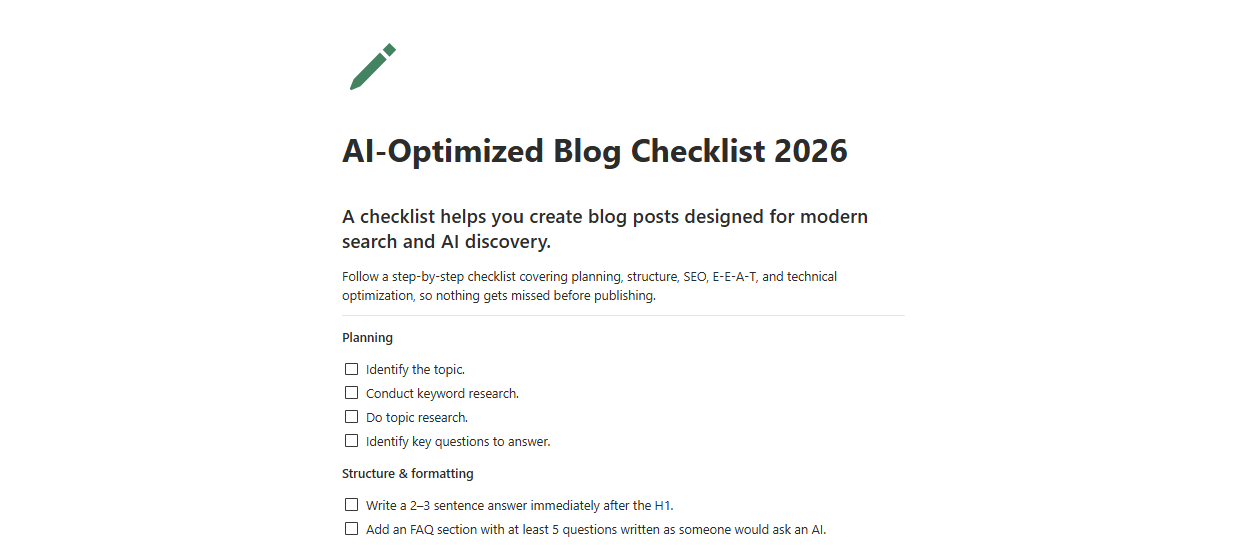
Before publishing, check if your article has:
✓ A clear search intent
✓ Specific topic targeting
✓ Direct definitions
✓ Question based headings
✓ Structured formatting
✓ Internal links
✓ Semantic relevance
✓ Original examples
✓ FAQs
✓ Actionable takeaways
✓ Human readability
✓ AI retrieval clarity
Final Thoughts
The future of blog rankings is not about gaming algorithms.
It is about clarity.
The blogs that perform best in 2026 are:
• specific
• structured
• useful
• experience driven
• easy to retrieve
• easy to understand
If your content helps both humans and AI systems quickly understand the value of your information, you are already ahead of most websites still publishing generic SEO articles.
Write for understanding first.
Optimization becomes easier after that.

-1.png)